


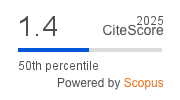
| Journal of Midwifery Reproductive Health | |
| Rejection Rate | 58.89 |
| Average time to first decision (days) |
17.24 |
| Article View | 2260278 |
| View Per Article | 3323.94 |
Aims & scope
The Journal of Midwifery & Reproductive Health (JMRH) is a peer-reviewed open access quarterly journal of Nursing & Midwifery School, Mashhad University of Medical Sciences, Mashhad, Iran. This professional journal provides a venue for the publication of research relevant to midwifery and reproductive health practice by the researchers in various disciplines including midwifery, reproductive health, maternal and child health, obstetrics and gynecology, reproductive medicine, sexual health promotion and women's health. It publishes quantitative and qualitative original articles, review articles, short communications, commentaries, case reports, editorials and letters to the editor in a broad range of clinical and interdisciplinary topics including maternal and child health, safe pregnancy and normal childbirth, adolescent health, sexual and reproductive health, family planning, menopause, screening of gynecological cancers, infertility holistic care, women's mental health, psychosocial and ethical aspects of women’s health, counseling and educational interventions in midwifery and reproductive health, women’s empowerment and reproductive rights.
Peer Review Policy
All submitted research articles to this journal will be undergoing rigorous peer review, based on initial editor screening and anonymous reviewing by independent reviewers.
JMRH is indexed in different databases including Scopus, CINAHL, EBSCO, Google Scholar, IMEMR, DOAJ and ISC.
We invite all academics, researchers and students to submit their prestigious articles pertinent to the aim and scope of the journal to be reviewed in the shortest period of time.
Pages 5614-16
Sedigheh Abdollahpour, Mona Larki, Zahra Hadizadeh-Talasaz
Pages 5630-5640
Zigijit Azene, Tigist Derebe, selamawit Nigatu, Mangistu Abera, Aberash Beyene Derribow
Pages 5641-5651
Somayeh Attarian, Zhaleh Feyzi, Jamshid Jamali, Mahboobeh Firoozi
Pages 5652-5662
Mohammad N. Al-Shloul, Roqia S. Maabreh, Hekmat Y. Al-Akash, Sabah Alwedyan, Doha M. Al-Shloul, Nazzal M. Al-Shloul
Pages 5663-5674
Kurniati Devi Purnamasari, Yudita Ingga Hindiarti, Erna Yovi Kurniawati, Iqbal Pramukti
Pages 5675-5686
Yasman Darabpour Ghandali, Kourosh Zarea, Amin Sattari, Hossein Komili-Sani, Mohammad Hossein Haghighizadeh
Pages 5687-5695
Maryam Moghadasin, Hossein Rezaei Aderyani, Yasaman Merci
Pages 5696-5707
Sakineh Nazari, Hamid Alavi Majd, Sepideh Hajian
Pages 5708-5716
Maryam Abbasi Pirouz, Khadigeh Mirzaii Najmabadi, Mohammad Taghi shakeri, Abbas Zojaji
Pages 5717-5729
Mohammad Safi Uddin, Kanak Chapa, Nayamat Ullah
Pages 5730-5741
Mahla Salarfard, Marzieh Samieean, Zahra Abedian, Seyed Reza Mazlom, Hoda Azizi, Fatemeh Tara
Pages 5742-5754
Farbod Ebadi Fard Azar, Narges Saeedi, Mohammad Hossein Ghafoori, Saeed Bagheri Faradonbeh
Pages 5755-5766
Malihe Amirian, khadijeh Mirzaei Najmabadi, Nahid Maleki
Pages 5767-5778
Maryam Zamani, Fatemeh Khorashadizadeh, Hediyeh Feyzi Laein, Zohre Salari, Elham Azmoude
Pages 5779-5783
Leila Pourali, Atiyeh Vatanchi, Behzad Aminzadeh, Samira Armanpour


